
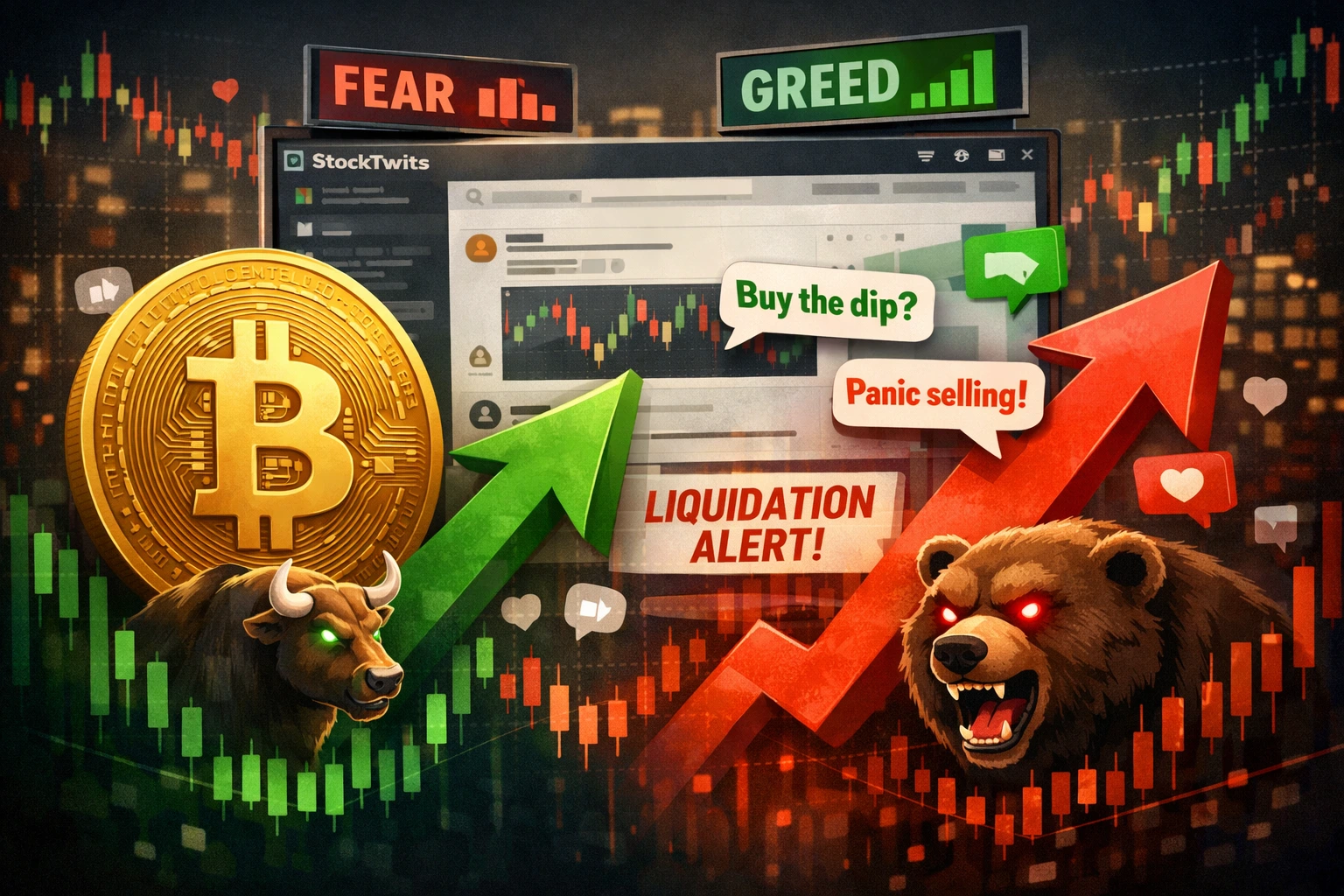
Bitcoin market sentiment among retail and professional traders has become a pivotal driver of short-term price trends in early 2026, according to social and market signals emanating from platforms like StockTwits and TradingView. While proprietary TradingView StockTwits news items such as Stocktwits:113a2cf5a094b highlight ongoing chatter around the BTCUSD pair, the full text typically requires a free account to view directly on TradingView. However, public market data and observable sentiment metrics show a consistent narrative: Bitcoin is enduring a challenging phase, and community reaction reflects heightened fear, uncertainty, and debate over future direction—a dynamic that could influence broader crypto trends.
In this deep dive, we break down 10 critical insights shaping Bitcoin market sentiment on StockTwits this week.
1. Bitcoin’s Price Decline Is Central to Sentiment Drop
Over the past week, Bitcoin’s price has weakened, trading near lows not seen this year and falling sharply from highs above $125,000 in late 2025. According to real-time BTCUSD data, the asset has retraced significant gains, contributing to bearish sentiment and triggering discussions around capitulation and support levels.
Community sentiment on StockTwits often mirrors price action closely; sharp declines tend to spur fear-driven commentary and increased posting volumes, signaling heightened engagement in bearish conditions.
2. Retail Traders Express Fear, But Some See Value
Sentiment indicators on social platforms frequently classify prevailing moods into Fear and Greed indexes. A fall in Bitcoin price typically elevates the Fear score, as traders express concern over further downside. On StockTwits, some users have highlighted potential “panic area buy zones” where long-term holders view pullbacks as accumulation opportunities.
This internal market dialogue reflects a divide: short-term traders voice worry, while long-term HODLers emphasize future upside.
3. Technical Traders Cite Key Support Levels
Posts categorized under BTCUSD on TradingView and StockTwits often contain technical analysis. A recurring theme is the identification of critical support clusters between key psychological price points ($65,000–$75,000) based on order book data and historical demand zones.
Technical traders argue that if Bitcoin fails to hold these support ranges, sentiment could erode further, possibly culminating in deeper retracements.
4. Liquidation Events Amplify Downside Alerts
Large-scale liquidations of leveraged positions have amplified bearish sentiment among traders posting on StockTwits. As prices tumble, forced liquidations can create cascading effects — a phenomenon frequently discussed in community comments. Over the past weeks, a spike in such events has coincided with sharper price movements, and the chatter reflects concern over systematic risk and amplified volatility.
This risk-off thesis is especially prevalent among short-term futures traders.
5. Bitcoin Whales and Institutional Signals Divide Viewpoints
The broader crypto market sentiment is further influenced by large holders (“whales”) and institutional narratives. Some StockTwits users point to on-chain data showing that large wallet cohorts have been reducing supply holdings in recent weeks — a dynamic that underscores hesitancy among major stakeholders. Analysts on social media have debated whether this activity signals capitulation or strategic profit-taking.
Institutional interest, or lack thereof, remains a key talking point in sentiment threads.
6. Macro Factors Intensify BTC Sentiment Swings
Recent macroeconomic data, including stronger-than-expected U.S. jobs reports, has dampened market anticipation for near-term rate cuts by the Federal Reserve. This backdrop has pushed risk-assets like Bitcoin into a risk-off trading environment, which in turn influences how speculative traders voice expectations on StockTwits.
The interplay between macro policy outlook and crypto sentiment is increasingly pronounced in conversations online.
7. Regulatory Concerns Add to Sentiment Uncertainty
Parallel to price conversations on StockTwits, broader regulatory news continues to affect trader sentiment. Examples include China’s reasserted crackdown on cryptocurrency activities, including restrictions on overseas token issuance — a development that has heightened bearish narratives in global crypto communities.
Regulatory pressure often feeds into community sentiment by triggering caution among traders assessing macro risk.
8. Alternative Crypto Narratives Are Emerging on Social Feeds
Sentiment isn’t solely bearish. On StockTwits, some traders discuss alternative narratives — such as Bitcoin’s potential correlation with broader adoption metrics, institutional balance sheet strategies, and altcoin rotations. These threads often contrast technical short-term sentiment with long-term fundamental optimism.
Even amid price declines, diversified community views help temper universal negative sentiment.
9. Sentiment Analytics Tools Show Mixed Confidence Levels
Quantitative sentiment tools that aggregate public commentary on BTCUSD streams show mixed confidence levels. While bearish sentiment clusters have been strong in the short term, longer-term sentiment scores remain neutral — a sign that many community members are waiting for confirmatory signals before committing to directional bias.
These analytic indicators are frequently shared and reinterpreted on StockTwits, amplifying conversation threads about volatility and positioning.
10. Anxiety Around Volatility Spurs Risk Management Dialogue
One of the most commonly observed themes on community platforms in recent weeks is conversations about risk management — including stop-loss discipline, profit booking strategies, and position sizing amid high volatility. Traders on StockTwits are emphasizing that risk awareness is crucial in a turbulent market, reflecting broader sentiment that prioritizes preservation over aggressive bets.
This shift toward cautious positioning indicates a more mature, albeit nervous, trader base actively engaging in Bitcoin sentiment discussions.
Why This Matters
Bitcoin market sentiment on social platforms like StockTwits increasingly serves as a real-time barometer for trader psychology — especially in times of heightened volatility and macro unrest. While sentiment alone does not determine price direction, the collective mood of retail and technical traders can influence liquidity patterns, order flows, and the pace of market reactions. For analysts, understanding these sentiment narratives is crucial for interpreting market behavior beyond pure ticket price analysis.
Bitcoin’s price trajectory in 2026 has been a major driver of market sentiment on platforms like StockTwits. Traders and investors are debating near-term controls — support levels, liquidations, macro influences, and regulatory pressure — while sentiment oscillates between fear and opportunistic optimism. Tracking these evolving conversations can help market participants contextualize price action and gauge crowd psychology in real time.